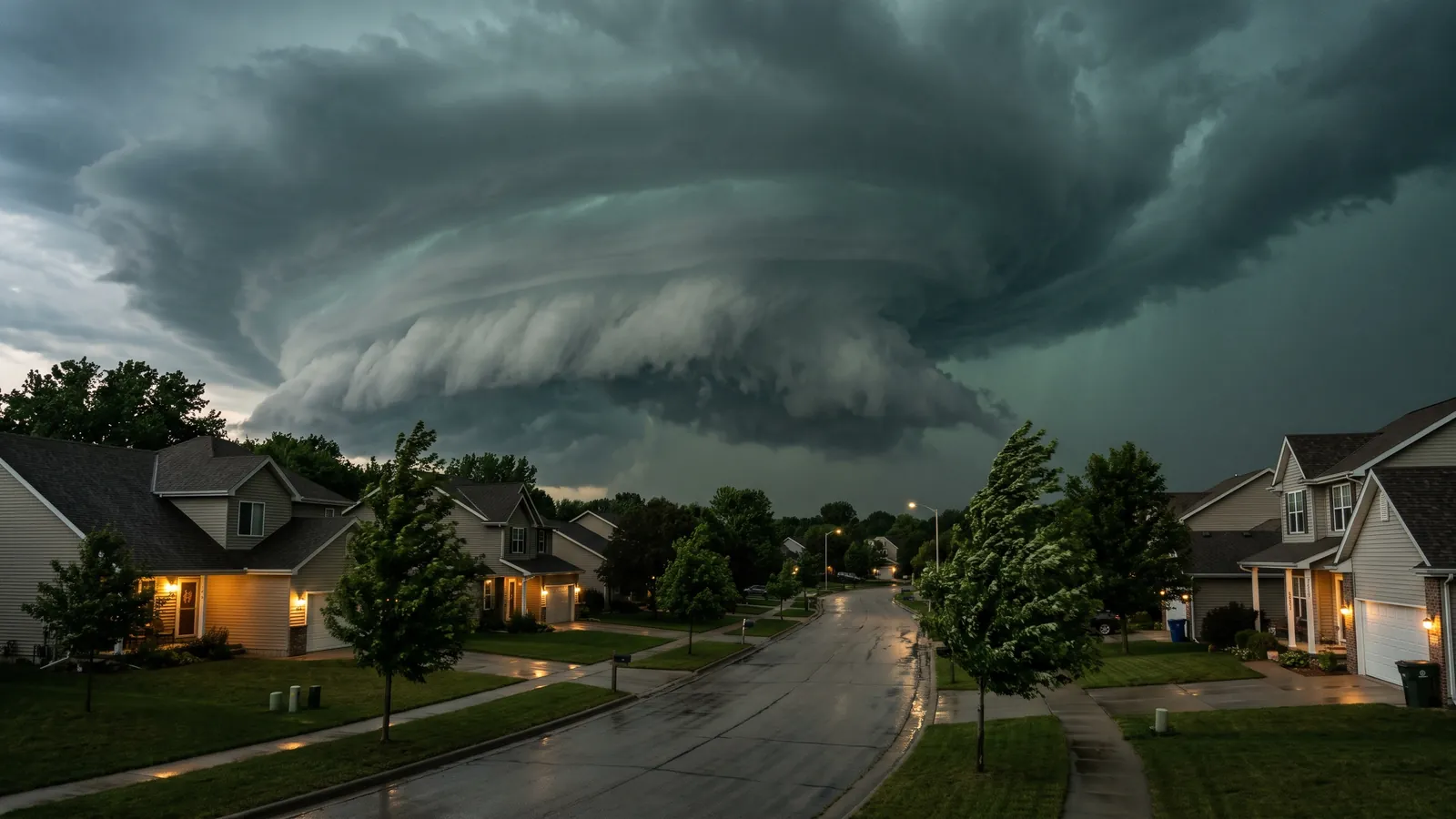
Water coming in? First we stop it. Then we fix it properly.
An emergency visit has one job: get the house dry. A tarp or temporary patch goes on as soon as it's safe to climb, and the permanent repair is priced once the weather lets us see the whole roof.
Call (515) 420-1811 as soon as you see it. The phone rings through 24/7, your address and the problem are taken down, and the first crew available is sent out. At night or in lightning we may hold the climb until it's safe; the call still goes on the list right away, so you're first in line at daylight.
What to do while you wait
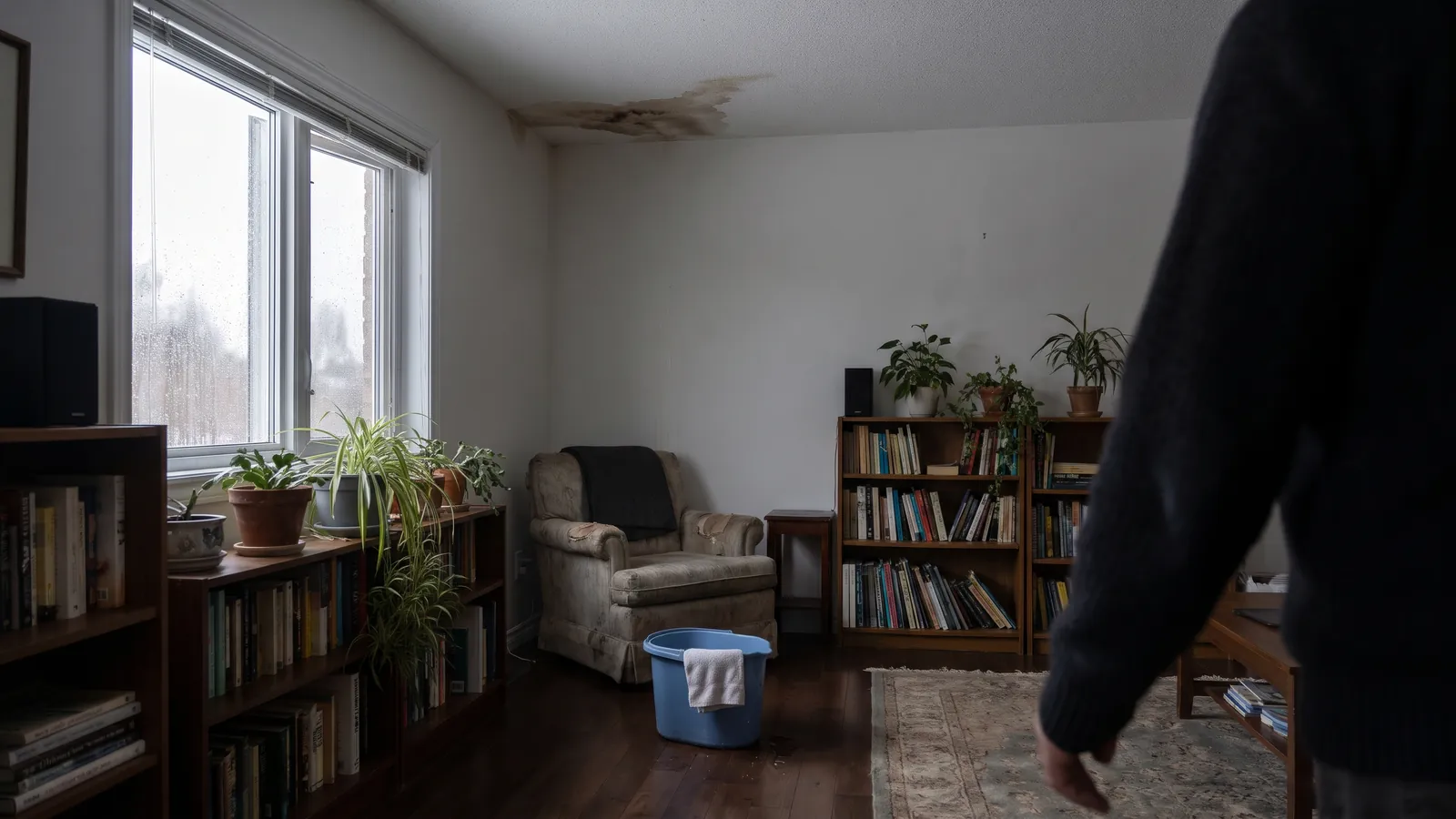
- Move what you canGet electronics, rugs and furniture out from under the drip. A bucket on a towel catches more than you'd think.
- Relieve a bulging ceilingIf drywall is sagging with water, a small hole in the lowest point lets it drain into a bucket instead of letting the whole panel come down. Stand to the side.
- Stay off the roofWet shingles, wind and a ladder in the dark are how people get hurt. That part is ours.
- Take photosPictures of the ceiling, the yard and anything that came down help your insurance claim later.
What we do when we arrive
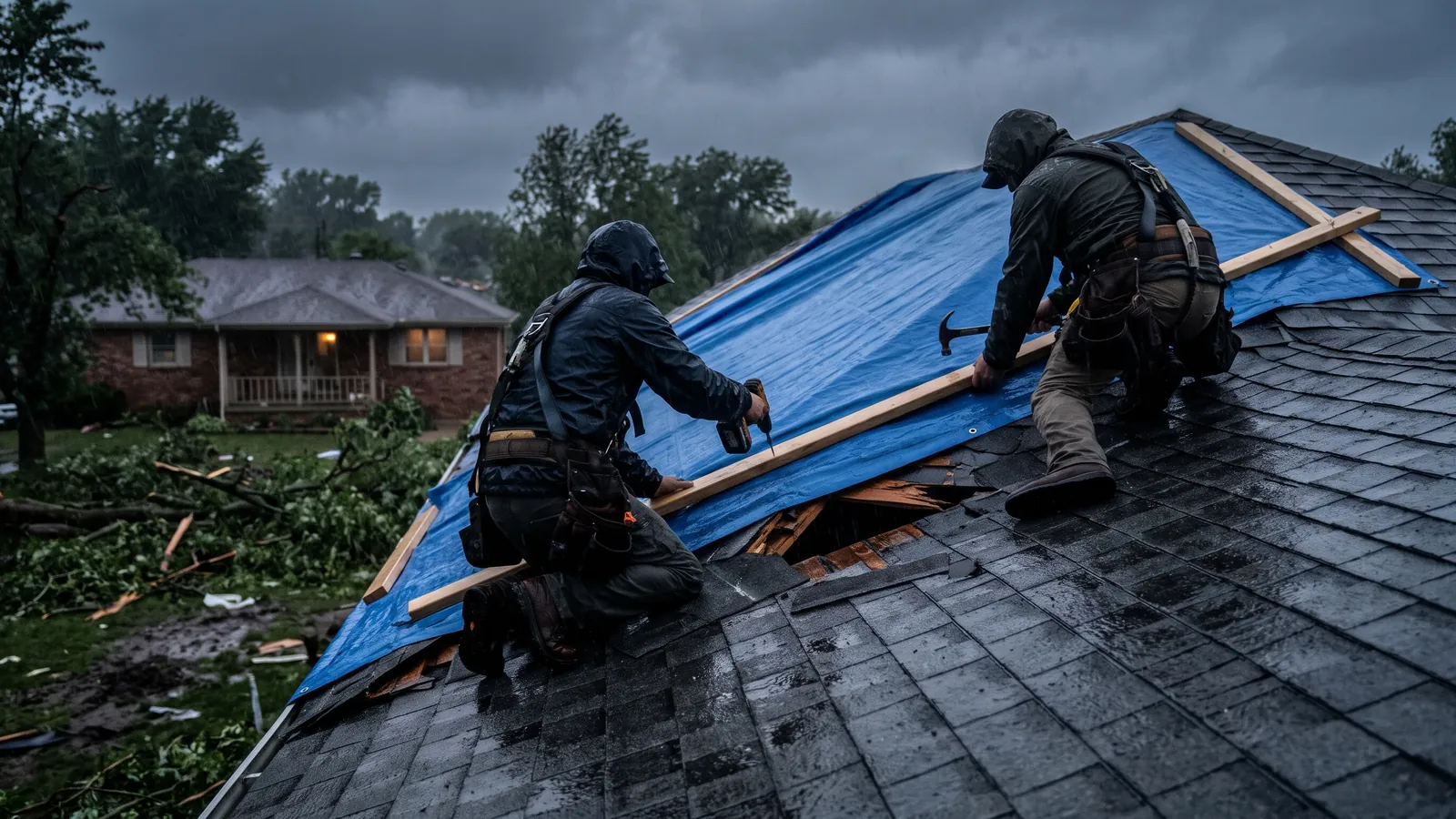
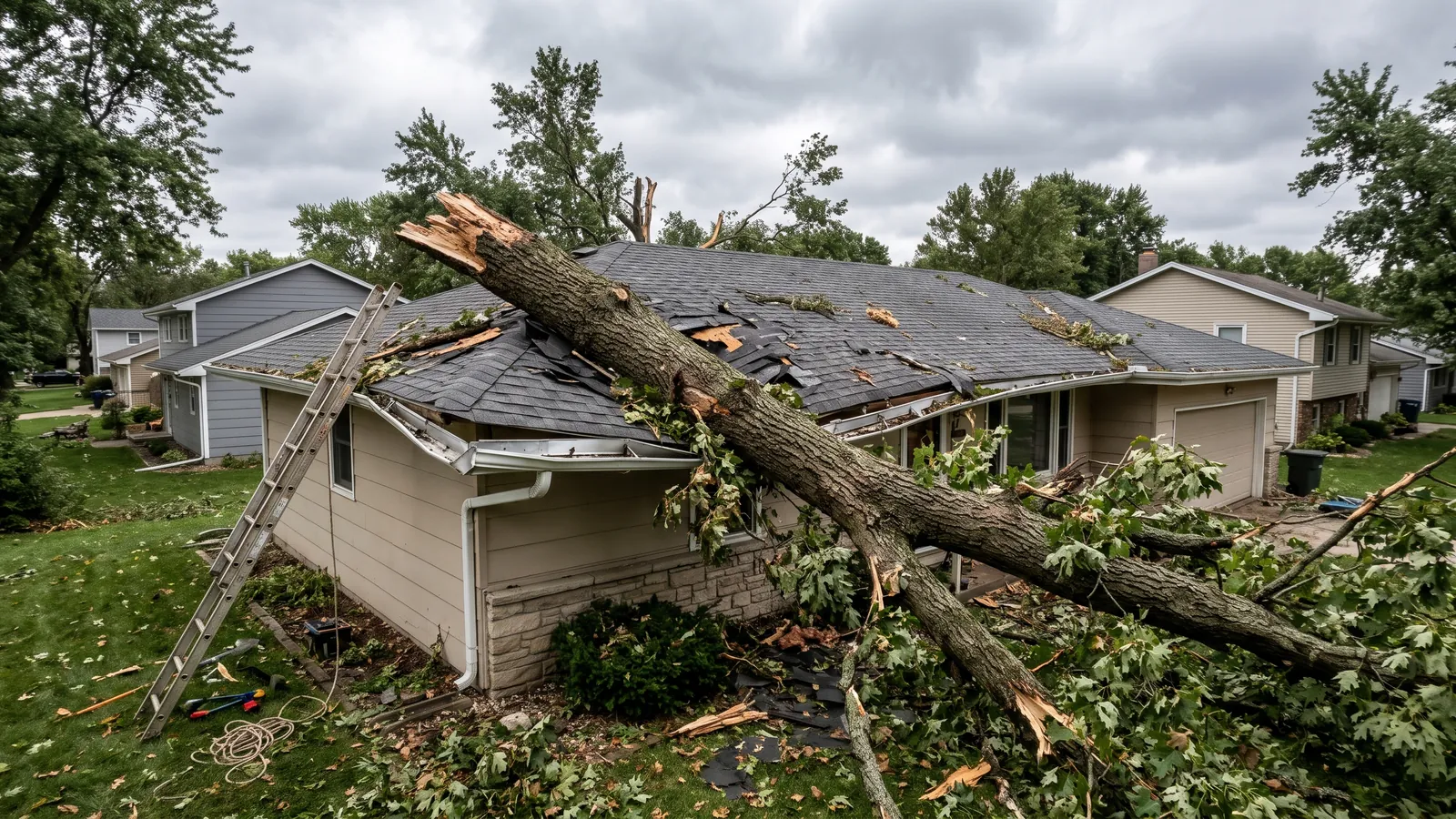
For an open hole or missing shingles, we cover the damaged area with a heavy tarp that runs over the ridge, fastened with wood battens rather than nails through the field of the tarp, so wind doesn't tear it and rain doesn't run under it. For a tree limb through the deck, we wait for the tree crew to lift it, then frame or board the opening and tarp over it. For a leak at a vent, chimney or valley, a temporary seal is often enough to get through the storm.
Before we leave you get photos of the damage and the temporary repair. When the weather clears we come back, inspect the whole roof, and give you a written price for the permanent fix. If it's storm damage, that same report becomes the start of your claim; most policies expect you to take reasonable steps to prevent further damage, and an emergency tarp is exactly that.
Emergency repair prices
| Work | Typical range | What moves it |
|---|---|---|
| Emergency tarp, one area | $300 – $900 | Size of the area, roof pitch, height |
| Whole-slope tarp after wind damage | $800 – $1,800 | Roof size |
| Opening boarded after a tree limb | $450 – $1,200 | Size of the hole, framing needed |
| Temporary leak seal at a vent or flashing | $200 – $450 | Access |
| Return visit to inspect and price the permanent repair | $0 | Once the weather clears |
Ranges are typical for Des Moines-area homes in 2026 and are here to help you plan. Your real price comes after the free inspection, written down, before any work starts.
On the roof
Questions about emergency roof repair
Do you really come out at night?
Your call is logged 24/7, and a crew heads out as soon as it's safe to climb. In lightning or high wind that may be first light; the house still goes to the top of the list.
Will insurance pay for the tarp?
Many policies cover reasonable emergency measures to prevent more damage. Keep the invoice and the photos we give you and include them with your claim.
How long can a tarp stay on?
A well-fastened tarp can protect a roof for weeks, but sun and wind wear it out. We'd rather schedule the real repair within days, weather allowing.
Should I call my insurance company first?
Call us to stop the water, then call your insurer. Stopping further damage comes first, and we'll give you the photos they'll ask for.
Can you fix it permanently the same day?
Sometimes, for a vent boot or a few shingles. After a big storm the honest answer is a tarp now and a proper repair once we've seen the whole roof in daylight.
A tree is on my roof. Who do I call?
Call a tree service to remove it, and call us. Don't let anyone pull a limb off the roof without someone there ready to cover the hole.